
The tools do the work.The gaps cost attention.
The tools are only the beginning. Count the time spent moving context between them. Emerson removes those steps.
The stack a typical firm runs.
Every row is a real category with real vendors in it. If you recognise six of the eight, that is the point.
Most of these tools were designed before AI was part of the idea.
AI is being bolted on now. Emerson was built around it.
- Designed over ten years ago, for typing records in
- AI added on top of a system that was never built for it
- An interface that cannot keep up with what AI can now do
- Too big to redesign from the ground up, so it never will be
- Built now, with AI at the centre from the first line
- The record fills itself in from the conversations you already have
- One interface designed around what the AI knows
- New capability reaches you without a migration
The person who holds it together.
Eight systems that do not talk to each other need somebody to move things between them. That job is real, it is usually a part-time ops hire or a VA, and it never appears on a software budget.
The invoices are the cheap part.
Eight logins
The handoff between tools
No one place to see a customer’s history
Say a name. Get everything.
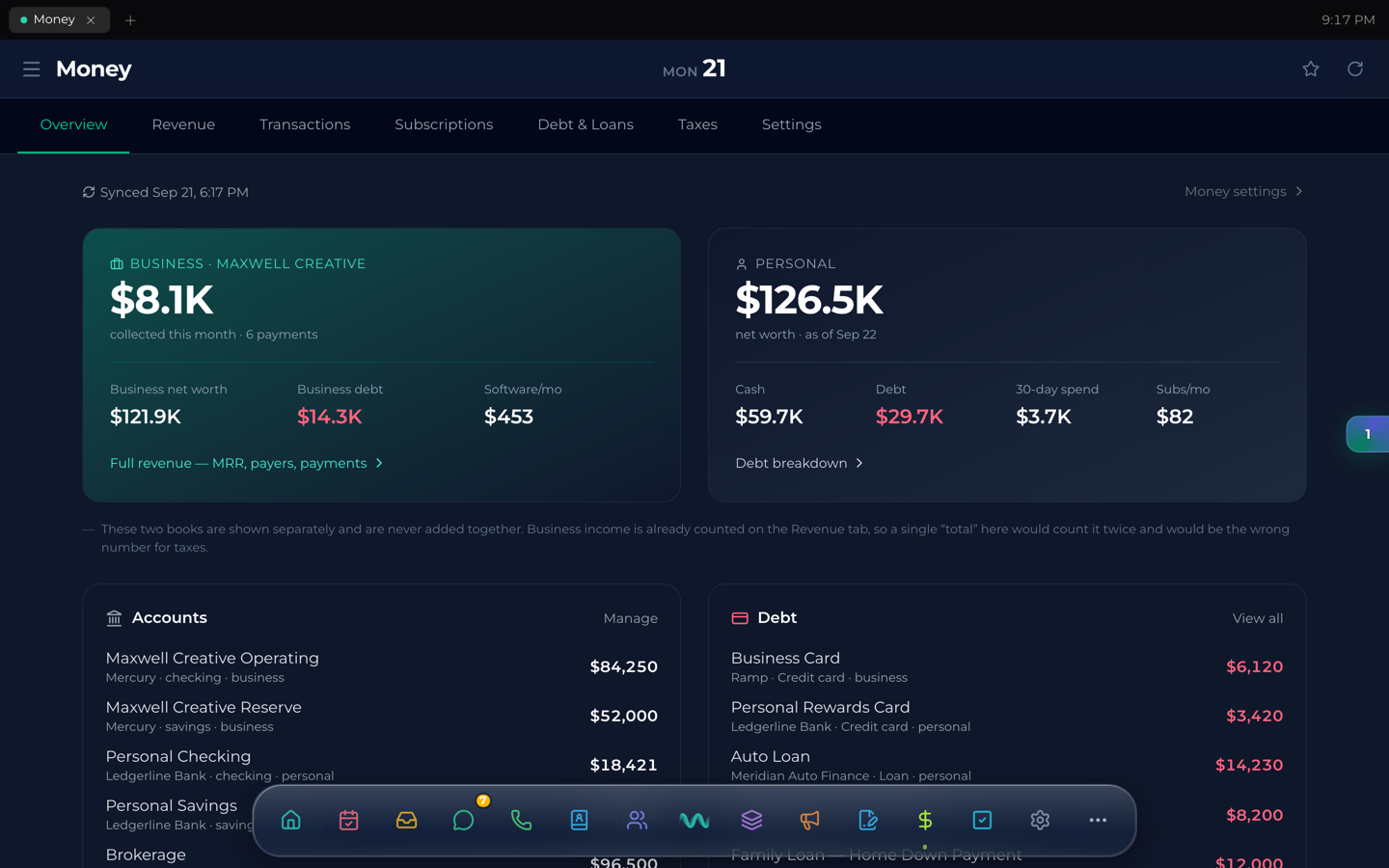
Emerson is the relationship CRM that gives your firm a shared memory. Connected emails, calls, meetings, documents and payments come together around each client, so your team knows what happened, what was promised and what needs to happen next.
When the context lives with the relationship, a handoff does not have to start from zero. Walk into the meeting prepared, pick up where a colleague left off, and review the next commitment before it slips.
When to keep the stack you have.
Three cases where this page does not apply to you.
You are two people and one tool
One of those tools is doing something specific, and doing it well
You already paid for the year
Comparing against one tool in particular? DealCloud, Affinity, Juniper Square.
What people push back on.
You are counting a person. Is that fair?
It is the honest line, so we put it in the open rather than hiding it in a footnote. Eight systems that do not talk to each other need somebody to move things between them, and that job is usually a part-time ops hire or a VA. If nobody in your firm is doing that job, compare the tools on their own.
What does Emerson cost?
Every firm gets a quote, based on your people, the mailboxes you connect, what you want Emerson to run and your timeline. Bring your current tool list and we will tell you what Emerson replaces.
What if we only replace four of the eight?
Then you replace four. Nobody moves everything on day one, and the tools you keep do not break. The point of the table is not that you must cancel all eight, it is that the stack is not just the tools, it is the tools plus the work of holding them together.
Who does the migration?
We do. We build the dashboard, connect your mail and calendar with you on a call, and import what you already have. A 15-minute look at your workflow. Standard setup in two business days after scope and access are confirmed.
What does it actually replace?
Emerson brings client records, meeting capture, e-signatures, campaigns, tasks and shared documents into one workflow. We review your current tools with you to decide what can be replaced and what should stay.
How fast can we be running?
Standard setup takes two business days after we confirm the scope and receive the access and files we need. Larger migrations and custom work get an agreed schedule.
How much does it cost?
Every firm gets a quote. It is based on your people, the mailboxes you connect, what you want Emerson to run and your timeline. Request a quote and we will walk through it with you.
Can we get our data out?
Yes, whenever you ask, as a full export in a format you can actually open. Your data is yours. Emerson itself stays ours, so what you would take is the record, not the software.
Do I have to move off the tools I like?
No. Your mail stays where it is, Gmail or Outlook. Emerson reads and writes through your own account rather than replacing it.
Anything else, email hello@emersonnorth.com.